
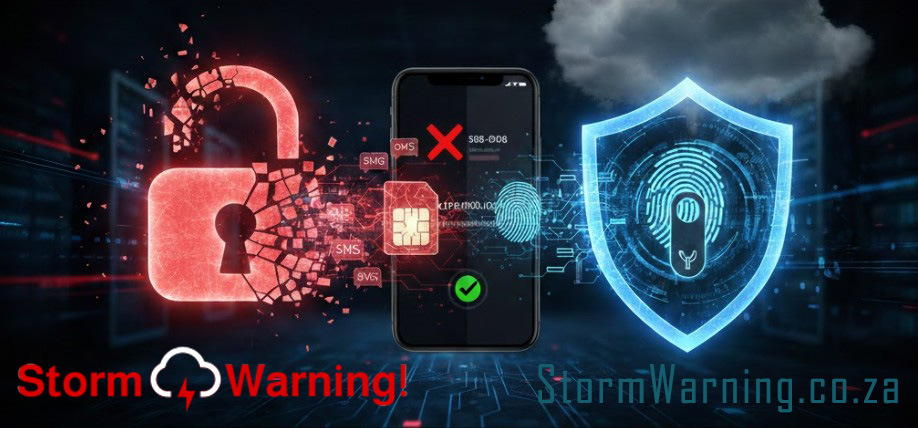
We have long advocated that Two-Factor Authentication (2FA) is one of the most effective ways to protect your online accounts. By requiring a second form of verification beyond just a password, you create a vital layer of defense. However, the method you choose for that second layer is just as important as the security it provides.
If you are still receiving your 2FA codes via SMS (text message), your accounts are more vulnerable than you think. At StormWarning!, we urge you to transition away from SMS-based authentication. Here is why this "convenient" method is actually a significant security risk.
1. An Outdated and Unencrypted Protocol
SMS relies on a communication protocol called Signaling System No. 7 (SS7), which was developed in the 1970s. It was built for an era where the network was small and users were trusted. Today, SS7 is riddled with vulnerabilities. Because SMS messages are transmitted as "plain text" without end-to-end encryption, sophisticated hackers can intercept these codes mid-air before they ever reach your device.
2. The Rise of SIM Swapping
One of the most dangerous threats today is "SIM Swapping." This occurs when a cybercriminal uses social engineering to trick a mobile carrier into porting your phone number to a SIM card they control. Once they have your number, every 2FA code meant for you goes directly to them. They don't need to steal your physical phone; they only need to steal your identity within the cellular network.
3. Reliability Issues
Beyond security, SMS is fundamentally unreliable. We have all experienced delays where a 2FA code takes minutes to arrive—or never arrives at all. This often happens during peak network traffic or when you are in areas with poor cellular reception. If you lose your signal, you lose access to your accounts.
4. A False Sense of Security
The biggest danger of SMS 2FA is complacency. Many users believe they are fully protected because they have a "second factor" enabled. In reality, relying on 1970s technology to protect 21st-century assets creates a gap that modern attackers are eager to exploit.
Better Alternatives: What Should You Use?
Security is an evolution, not a destination. To truly secure your digital footprint, consider these alternatives:
- Authenticator Apps: Tools like Google Authenticator or Microsoft Authenticator generate "Time-based One-Time Passwords" (TOTP) locally on your device. They don't rely on the cellular network and cannot be intercepted via SIM swapping.
- Hardware Security Keys: Physical devices (like YubiKeys) offer the highest level of protection by requiring a physical "touch" to authorize a login.
Take Control of Your Security with StormWarning!
Don't wait for a security breach to realize your defenses are outdated. At StormWarning!, we specialize in helping organizations and individuals navigate the "cyber storm." From comprehensive NIST CSF Readiness Audits to targeted Cybersecurity Awareness Training and our advanced StormFront monitoring platform, we provide the tools you need to stay ahead of evolving threats.
Secure your future today.